
When companies select CEOs in their 40s.
Generational changes are occurring in the executive suite as more companies hire chiefs in their late 40s.
Generation X is moving into the corner office, bringing a different style to the way companies are run. So begins a recent article in the Wall Street Journal. Here are a few of the highlights from that article and possible implications for HR professionals.
In general, younger Chief Executive Officers (aka CEOs) tend to:
- Be more dedicated to keeping products and services relevant for the rising millennials projected to comprise 75% of the workforce by 2025.
- Take more risks
- React faster to sudden business shifts. Are more nimble and agile.
- Favor a flatter organizational structure so they can make decisions faster
- Be tech savvy and focused on technology
AND…they are more focused on talent management and development. According to the article, Gen X CEOs:
- Spend more time wooing and keeping younger staffers.
- Delve deeper into hiring and retention.
- Place more emphasis on human capital for long-term competitive advantage.
- Look for better ways to balance work-life needs for all employees.
- Emphasize setting of the culture of the organization.
Here are a few relevant quotes by contributors to the article:
- “Talent acquisition and retention is a huge component of what we [new CEOs] need to think about. That is where you get to set the culture.”
- “Businesses gain a greater recruiting advantage from their organizational culture than higher salaries or fast promotions.”
- “Managing talent is a critical focus for the new CEOs because the contemporary economy heavily depends on service and knowledge workers, and corporate loyalty has faded as people change jobs more often.”
- “Millennials, people in their mid-teens to mid-30s, have a different expectation of what they’re looking for in employers,” favor greater flexibility about where and when they work, and “their hearts want to be engaged.”
Featured in the article are new CEOs younger than 50 in McDonald’s, Harley Davidson, Microsoft, and Aqua America.
Competencies and competency-based applications can be used to set and communicate an organization’s culture and values. Many organizations recognize the importance of culture in achieving competitive advantage. Executives can identify a competency framework that best reflects the characteristics of current and future employees, characteristics that are a good “fit” for the organization’s culture.
Human resources can build a competency architecture, models, and applications that are customized to the organization’s unique culture and strategy and that provide a framework for selecting, developing, and retaining talent. This can be accomplished with a methodology that doesn’t require complex software or off-the-shelf models. If a generic competency dictionary is used to facilitate the process, it should be seen by employees as practical, comprehensive, easy to work with (no more than 40 competencies), and written and organized in a way that is easily understood by all.
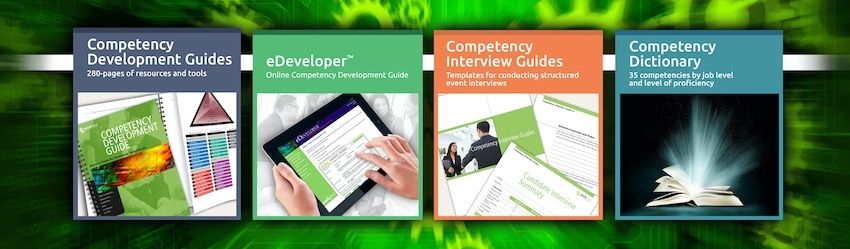
Workitect’s competency system is a blueprint for designing competency-based talent management applications that address the interests of the Gen X CEOs and employees described in this article.
 To learn more about our products and services, and how competencies and competency models can help your organization, call 800-870-9490, email edward.cripe@workitect.com
or use the contact form at Workitect.
©️2024, Workitect, Inc.

Tags: business strategy, Career Planning, change management, employee retention, framework, HR strategy, Leadership Competencies, organization development, organizational culture, organizational values, talent management, talent strategies, work-life balance
Related Posts
Recent Posts

In Good Times & Tough Times, You Need Competent People
People. Not money, not buildings, not tools. Competent people are your most valuable resource. And…

What is the One-Size-Fits-All Competency Model?
In the One-Size-Fits-All Approach, a competency model is developed for a broadly defined set of…
Is Your Performance Management System Working?
If it isn’t working, consider a… COMPETENCY-BASED PERFORMANCE MANAGEMENT SYSTEM Many organizations are becoming…

The New Reality: Career Streams vs. Career Ladders
Along with many other changes in how employee performance is managed, there is a…