“I’ve seen many overly complicated systems. This is a more simplified competency dictionary.”
Manufacturing


Include in Workitect’s Competency Dictionary
In Workitect’s model-building methodology, technical competencies are determined through interviews, expert panels, and other methods as described in “Add Technical Competencies to Your Competency Dictionary”, and as taught in our Building Competency Models and Creating Technical Competencies certification workshops. The purchase of a separate technical competency dictionary is not required.
When it is determined that superior performers in a position require a high level of technical expertise in a specific field, the technical competency (or competencies) can be included in a competency model as described in “How to Include Technical Competencies in Job Competency Models”.
Technical Competencies ensure that departments develop the skills needed to implement the organization’s strategy and plans. Some of the reasons for identifying your technical competencies are:
Technical competencies describe the skills a person “must be able to do” to effectively perform in a specific job, role or function. Technical competencies describe distinct “units of work” performed by an individual. Technical competencies require the application of skills, knowledge and abilities. Technical competencies can be identified for specific jobs within one organization or across branches of an organization. Technical competencies are also developed at the industry or professional level to set performance standards for national certification and training programs.
Ready to add technical competencies customized to your organization?
Request more information or talk with a Workitect consultant about how our services, tools, and training can help you identify, describe, and apply technical competencies integrated with non-technical competencies.
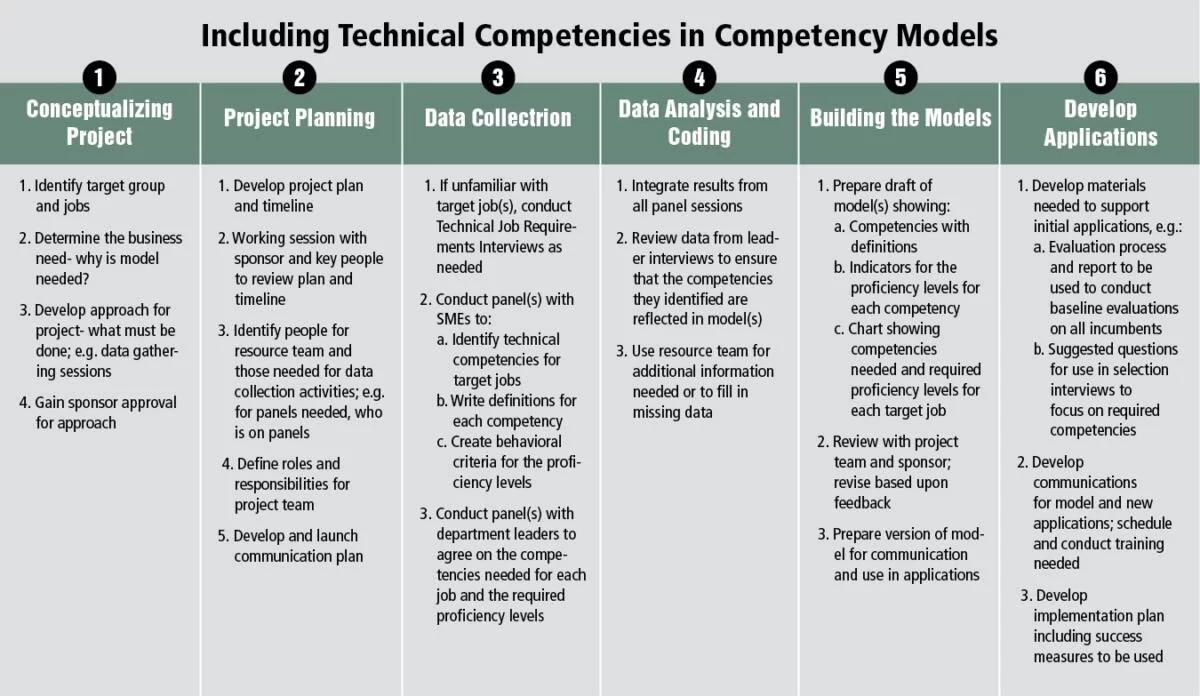
Many organizations want to include technical competencies, skills, knowledge, in competency models and human resource applications. Off-the-shelf competency libraries and dictionaries for very specific technical specialties are available. Most are comprehensive, complex, and expensive.
In addition, the competencies are so job-specific that there may be no competency dictionaries or libraries that accurately describes all of the technical competencies used in an industry or organization. An alternative to using an off-the-shelf dictionary is to develop a custom dictionary, identifying the technical competencies using proven data collection and analysis techniques. Read More >
LEARN MORE ABOUT TECHNICAL COMPETENCIES
• Guided Launch of a Competency Modeling Project that Includes Technical Competencies
• Understanding General and Technical Competencies
| Level | Definition |
| Basic Proficiency |
|
| Intermediate Proficiency |
|
| Full Proficiency |
|
| Expert |
|

Competency-based HR applications have been created for performance management, assessment and selection, succession planning/management, training and development, and workforce management (re-engineering, upskilling, downsizing, and mergers).

Successful implementation of a competency-based HR system requires analysis and planning, model-building, developing applications, and implementation, using Workitect’s proven competency assessment methodology. Read more (PDF)
When planning the development of a competency framework, competency model or models, there are practical considerations that affect the design of the project, the format and content of the competency model, and the success of the project’s implementation. The following seven questions may be useful to professionals responsible for planning and implementing:

Superior Performers Produce Superior Results
An effective system requires a clear understanding of the core competencies required for success in roles, and an accurate assessment of the strengths and weaknesses of employees.

To speak with a consultant about your situation, needs, and our capability to help:


“I’ve seen many overly complicated systems. This is a more simplified competency dictionary.”

Speak with a Workitect consultant today and start transforming your talent strategy.