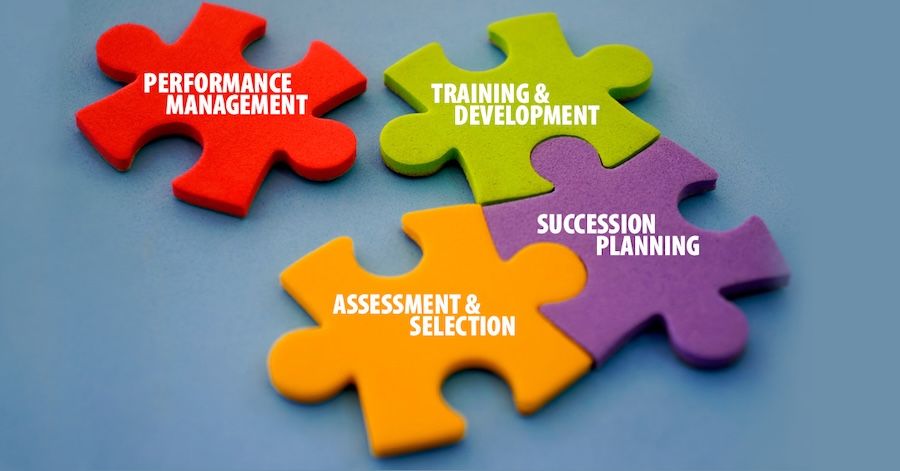
INTEGRATING KEY HR & TALENT MANAGEMENT PROCESSES
[fusion_builder_container type=”flex” hundred_percent=”no” equal_height_columns=”no” hide_on_mobile=”small-visibility,medium-visibility,large-visibility” background_position=”center center” background_repeat=”no-repeat” fade=”no” background_parallax=”none” parallax_speed=”0.3″ video_aspect_ratio=”16:9″ video_loop=”yes” video_mute=”yes” border_style=”solid”][fusion_builder_row][fusion_builder_column type=”1_1″ layout=”1_1″ background_position=”left top” border_style=”solid” border_position=”all” spacing=”yes” background_repeat=”no-repeat” margin_top=”0px” margin_bottom=”0px” animation_speed=”0.3″ animation_direction=”left” hide_on_mobile=”small-visibility,medium-visibility,large-visibility” center_content=”no” last=”true” hover_type=”none” first=”true” min_height=”” link=”” background_blend_mode=”overlay”][fusion_text]
Using Competency Assessment Technology to Attract, Develop, and Retain Talent
Background
Workitect, Inc. provides research-based human resource assessment and development consulting services to help organizations integrate their key HR and talent management processes to improve their performance and to attract, develop, and retain talent. This includes:
• Using a unique technology called “job competency assessment,” which focuses on identification of the competencies of superior performers in key jobs in a client’s organization. The best people in positions to make the most difference provide the best templates for assessment and development of incumbents or candidates in similar positions. Emphasis on an organization’s most important job families offers the highest potential return to the firm.
• Undertaking projects with a view to helping clients develop an integrated Talent Management System (ITMS). In brief, this means working to ensure that Workitect’s work fits with other parts of a client’s HR system.
• Transferring it’s competency assessment technology to clients’ HR professionals to ensure implementation of programs recommended and increase the firm’s long-term capabilities.
What Are Competencies?
Workitect has worked with numerous client organizations to create competency models for various positions. In effect, these models are the “blueprints” for outstanding performance – both in thought and action – in any given job.
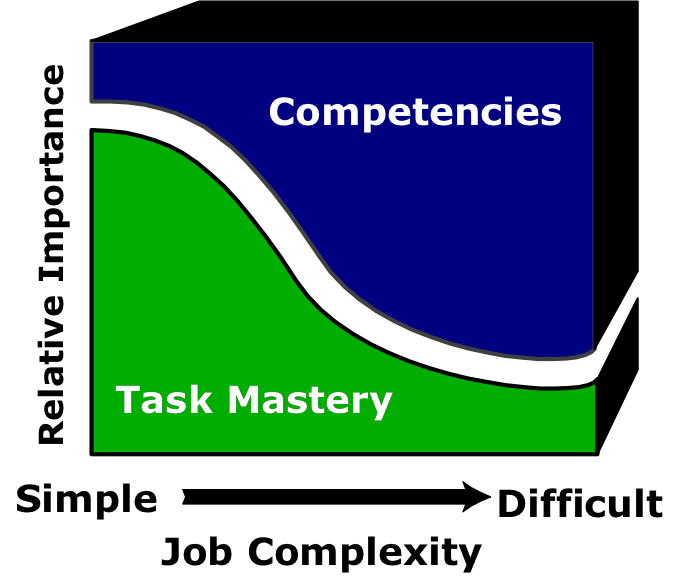
Workitect uses Job Competence Assessment (JCA) to create “job blueprints”. This research technique systematically identifies the critical characteristics that cause or predict outstanding job performance. Competencies include personal characteristics, motives, self-concept, knowledge, and behavioral skills. The more complex the job, the more important the competencies.
Competency Levels
Job competencies do not discriminate on the basis of race or sex (Austin, et al., 1986). To fully understand the capability that a person must bring to a job, we distinguish between the various levels and types of competencies. These distinctions have implications for selection, assessment, and development systems and programs. They also affect how each type of competency is measured or assessed.
Different types of competencies predict the ability to demonstrate job behaviors. For example, a planning competency predicts specific actions such as setting goals, assessing risks, and developing a sequence of actions to reach a goal. An influence competency predicts specific actions such as having an impact on others, convincing them to perform certain activities, and inspiring them to work toward organizational objectives.
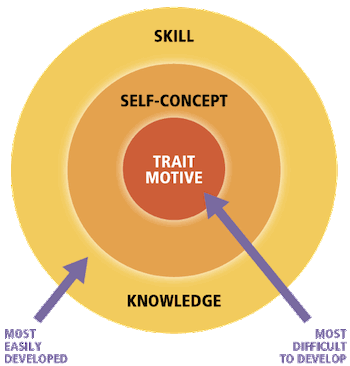
Competencies exist at various levels. As shown in the graph below, skills and knowledge exist at the behavioral or outermost level; social role and self-image exist at an intermediate level; and motives and traits exist at the deepest, or core, level.
Examples of Competency Levels
Behavioral
• Skills: An individual’s ability to do something well. Example: Demonstrating a product.
• Knowledge: Usable information that an individual has in a particular area. Example: In-depth information about competitors.
Self-concept: Attitudes and Values
• Self-Image: An individual’s perception of his or her identity.
Example: Seeing oneself as a “professional” (individual contributor) or a “manager.”
• Occupational Preference: The work an individual values and enjoys. Example: working with people versus things.
Personal Characteristics
• Traits: A typical way of behaving. Example: Being a good listener.
• Motive: Natural and constant thoughts in a particular area that determine outward behavior. Example: Wanting to influence the behavior of others for the good of the organization.
Workitect’s competency models identify competency types and levels for the job being assessed.
“Core” motive and trait competencies are hard to develop; it is
most cost-effective to select for these characteristics. Knowledge and skill competencies are relatively easy to develop; training is most cost-effective for these abilities. self-concept, attitude, and value competencies can be changed, albeit with more time and difficulty; these attributes are most cost effectively addressed by training with developmental job assignments.
Competencies which differentiate superior from average performance (differentiating competencies) and are hard to develop are most important for selection. Competencies more easily developed (minimal competencies) are less important for selection.
Minimal and differentiating competencies for a given job provide a template for personnel selection, succession planning, performance appraisal, and development.
Using the Competency Process to Drive Change
The process of identifying job requirements and required competencies means that the organization must first be clear about its short and long range direction. Once the direction is clear, it is important to determine the competencies that will be key to carrying out the organization’s strategy and reaching its long-range goals. These competencies may differ from what had been important in the past. In fact, the process of developing competency models may indirectly force the organization to think through its strategy.
In order to carry out the strategy, it then becomes critical to build human resource support systems that enable the organization to:
• assess the competencies of current employees,
• fill positions with people possessing the required competencies,
• reward employees who meet job goals and develop competencies, and
• provide training and development experiences that build the key competencies.
Creating an Integrated Talent Management System
An Integrated Human Resource System is a comprehensive set
of human resource functions and programs which:
• Share a common architecture or “language”; and
• Are organized to complement and reinforce one another.
This integration of HR information systems and programs contrasts with the typical system in which functions do not share a common language or complement one another: e.g., in which selection decisions are made on one set of criteria, performance is appraised on a second set of criteria, the training function teaches a third set of skills, etc. An integrated use of the competency assessment process is shown below.
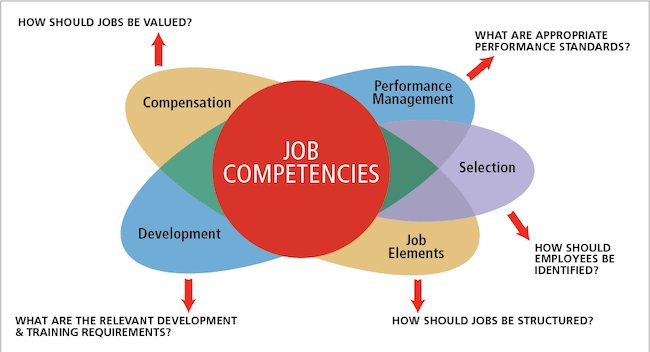
Components of a System – Job Elements:
The “nucleus” of an IHRMS is a set of core data about:
• Purpose
• Content: tasks, responsibilities, and functions
• Performance: standards and measures
• Measurement: points for compensation
• Competency requirements: the skills and characteristics that predict effective and superior performance in the job
• Employee competencies: the skills and characteristics individuals bring to their jobs.
Job elements are determined by a firm’s strategy and structure (design). Job element variables in turn drive the firm’s human resource planning and human resource management functions: recruitment, selection and placement, performance appraisal, development, succession planning, and support activities.
Development of an Integrated Human Resource System usually begins with two initial steps:
1. Organization Strategy:
Definition of success criteria for the firm, at present and over the next 5-10 years, and plans for how the firm will attain its goals. For example, a firm may project significant amount of future growth — and this growth is dependent on the firm’s ability to attract, develop and retain good people in key positions.
2. Organization and Job Design:
Definition of how the firm will organize itself to carry out its plans, with emphasis on identifying critical jobs: the value-added “make or break” positions and people which will make the biggest difference in whether the organization succeeds or fails. Human resource management is most cost-effective when it focuses on these jobs.
Steps 1 and 2 are usually performed by reviewing an organization’s business plans and interviewing its leadership. In situations where detailed strategic and human resource plans already exist, Workitect will collect the data necessary during an initial project planning meeting.
Benefits of an Integrated System
• Enabler of Cultural Change and Organizational Improvement: Rather than being a barrier to change (as is the perception of human resource systems and functions in some organizations), a competency-based integrated human resource system provides a supportive linkage to the organization’s strategic direction. Selecting and developing competent people produces a competent organization. A competent organization is more likely to survive in a highly competitive global economy.
• Cost Savings / Increased Productivity: Separate functions do not develop and maintain duplicate (and often competing) data bases, training and administrative overhead.
• Empowered Management: The tools and language of HR management are clearly defined and communicated; by understanding more of it, managers use more of it.
• Employee Participation and Reinforcement: Employees participate in the studies that define selection, compensation, appraisal, and development criteria; each and every employee contact with the HR system consistently communicates and reinforces these criteria.
NEXT BLOG POST – HOW TO DEVELOP COMPETENCY MODELS (using Workitect’s 6-step process as taught in Workitect’s Building Competency Models workshop)
Also available in “Integrating HR and Talent Management Processes” in the Resources and Support section of Workitect.com.

Contact us at 800-870-9490, info@workitect.com, or complete contact form.
[/fusion_text][/fusion_builder_column][/fusion_builder_row][/fusion_builder_container]

Tags: assessment, competencies, competency framework, competency levels, competency models, competency system, competency-based, framework, HR processes, HR strategy, integrated hr system, organization development, performance management, talent management, talent management processes, talent strategies
Related Posts
Recent Posts

In Good Times & Tough Times, You Need Competent People
People. Not money, not buildings, not tools. Competent people are your most valuable resource. And…

What is the One-Size-Fits-All Competency Model?
In the One-Size-Fits-All Approach, a competency model is developed for a broadly defined set of…
Is Your Performance Management System Working?
If it isn’t working, consider a… COMPETENCY-BASED PERFORMANCE MANAGEMENT SYSTEM Many organizations are becoming…

The New Reality: Career Streams vs. Career Ladders
Along with many other changes in how employee performance is managed, there is a…