
The Best of Best Practices for Competency Modeling
Competency modeling has been taking place for more than four decades. In our consulting practice, our consultants have encountered companies using a number of different approaches to building models. Some approaches have been very effective, reliable, and valid and some ineffective, unreliable, and not valid. Unfortunately, these practices have produced negative results and low expectations for competency-based approaches to human resources and talent management. People contemplating the building of models or improving existing models should first educate themselves about what have been found to be effective practices.
Listed below are recommendations for three of the best references for successful competency modeling. Two are referenced by SHRM in the development of the SHRM Competency Model. One, Competence At Work, is a book that describes the original research for competency modeling. Each reflects Workitect’s methodology for building job competency models and is taught in Workitect’s Building Competency Models certification workshop.
The Practice of Competency Modeling
(2000) Shippmann et al. Personnel Psychology. 53
The purpose of this article is to define and explain a trend that has caused a great deal of confusion among HR researchers, practitioners, and consumers of HR-related services: competency modeling. The Job Analysis and Competency Modeling Task Force, a work group jointly sponsored by the Professional Practice Committee and the Scientific Affairs Committee of the Society For Industrial and Organizational Psychology, concluded a 2-year investigation into the antecedents of competency modeling and an examination of the current range of practice.
Competency modeling is compared and contrasted to job analysis using a conceptual framework (reflected in a 10-dimension Level of Rigor Scale) that practitioners and researchers may use to guide future work efforts. They could be used as a basis for developing standards for practice. The strengths and weaknesses of both competency modeling and job analysis are identified and, where appropriate, recommendations are made for leveraging strengths in one camp to shore-up weaknesses in the other. https://www.researchgate.net/publication/227527571_The_Practice_of_Competency_Mo
Competence At Work: Models for Superior Performance
(1993) Spencer & Spencer, Pub. John Wiley & Sons
Competence at Work provides a brief history of the competency movement in industrial/organizational psychology and goes on to define “competency”. It provides analysis of 650 jobs, based on 20 years of research using the McClelland/McBer job competence assessment (JCA) methodology, an accurate and unbiased approach to predicting job performance and success. The book includes generic job models for entrepreneurs, technical professionals, salespeople, service workers and corporate managers. It defines JCA and describes in detail how to conduct JCA studies. It provides practical how-to instructions on how to adapt the methodology to the needs of an organization. Readers learn how to conduct the Behavioral Event Interview, a crucial technique involving detailed questions that enable an interviewer to accurately evaluate an individual’s performance potential in job-related situations. Describes how to analyze the accumulated data to develop competency models. Suggests future directions and uses for competency research. https://www.wiley.com/WileyCDA/WileyTitle/productCd-047154809X.html
Doing Competencies Well: Best Practices in Competency Modeling. (2011) Campion et al. Personnel Psychology, 64
This article presents a set of best practices for competency modeling based on the experiences and lessons learned from the major perspectives on this topic. Competency models are defined, and their key advantages are explained. Then, the many uses of competency models are described. The bulk of the article is a set of 20 best practices divided into 3 areas: analyzing competency information, organizing and presenting competency information, and using competency information. The best practices are described and explained. Practical advice is provided, and then the best practices are illustrated with numerous practical examples. Finally, how competency modeling differs from and complements job analysis is explained throughout. https://workitect.com/PDF/Competency-Modeling-Best-Practices.pdf
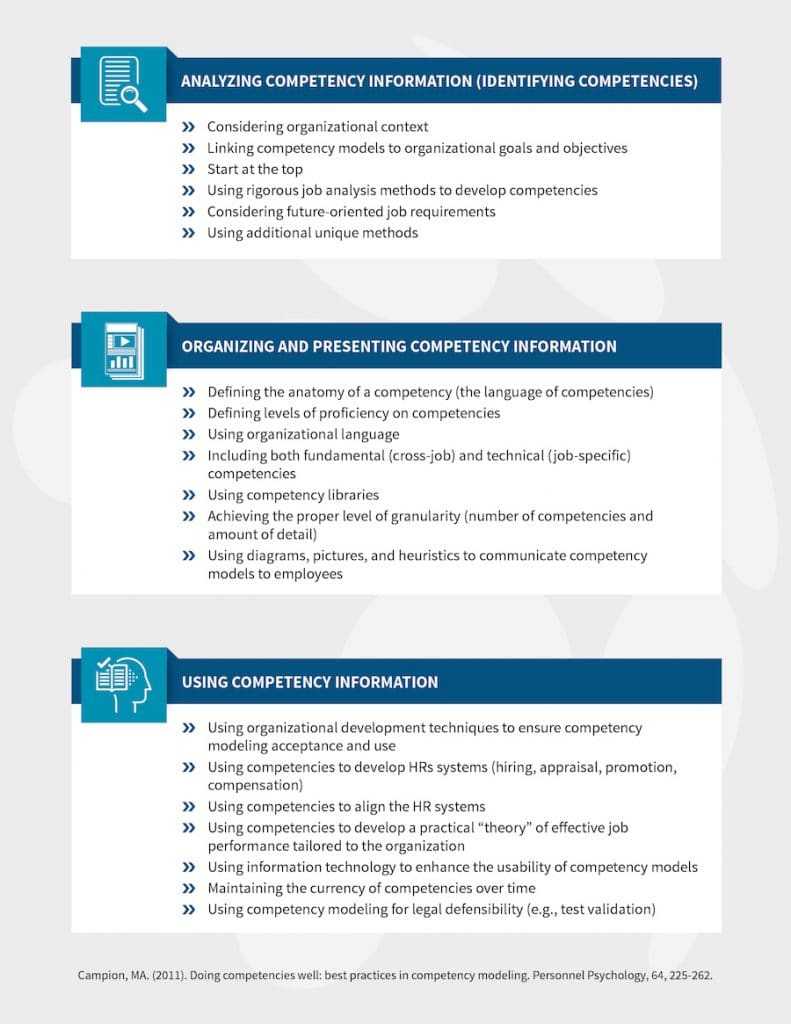
In future blogs, we will examine some of the twenty best practices listed in this article and describe ways to implement that practice. Examples from organizations that have done it well will be provided.
What practices, if any, are missing from the list of 20 best practices?
Which ones are the most important?
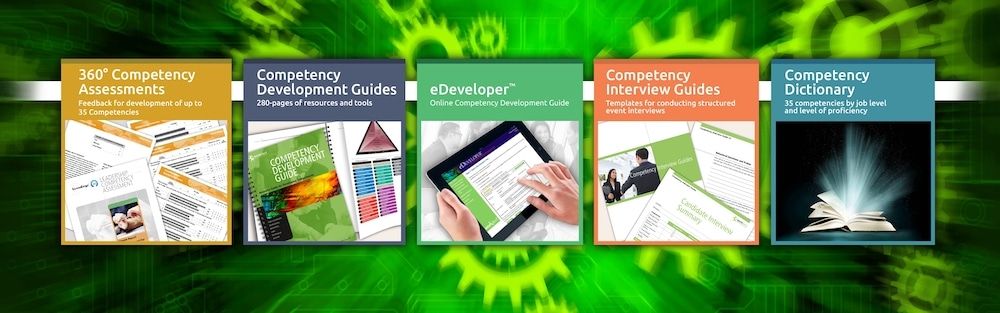
Learn more about Workitect’s integrated set of custom competency management tools.
 To learn more about our products and services, and how competencies and competency models can help your organization, call 800-870-9490, email edward.cripe@workitect.com
or use the contact form at Workitect.
©️2023, Workitect, Inc.

Related Posts
Recent Posts

In Good Times & Tough Times, You Need Competent People
People. Not money, not buildings, not tools. Competent people are your most valuable resource. And…

What is the One-Size-Fits-All Competency Model?
In the One-Size-Fits-All Approach, a competency model is developed for a broadly defined set of…
Is Your Performance Management System Working?
If it isn’t working, consider a… COMPETENCY-BASED PERFORMANCE MANAGEMENT SYSTEM Many organizations are becoming…

The New Reality: Career Streams vs. Career Ladders
Along with many other changes in how employee performance is managed, there is a…