
Tips for Building Great Competency Models
Whether you use Workitect’s six-step process or another process to build competency models for your organization, these actions and decisions will increase the likelihood of your project being successful.
• Start small. Don’t oversell, but start with a critical job.
• Consider alternative approaches, including “doing-it-yourself” or collaboratively with a consultant.
• “One-size-fits-all” model or multiple models for multiple jobs?
• Document and publicize the measurable payoffs.
• High tech or low tech?
• Accept or modify the terminology. Educate the users.
• Implement: develop applications.
Job competency models describe what superior performers actually do on a job that produces superior results. Armed with this information, selection, retention, training, succession planning and performance management systems can be integrated and designed that will attract, develop, and retain top performers.
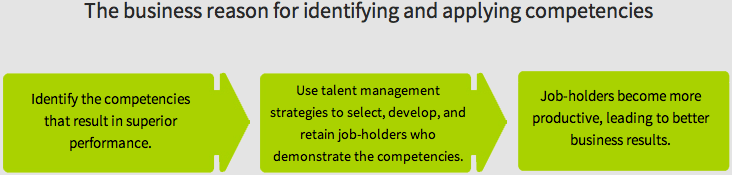
Superior performance that produces superior results means higher sales, productivity and profits. And everything can be measured. Which explains why many organizations have embraced competency technology. It has provided HR departments with a golden opportunity to demonstrate to line management that HR is able to “add value” that drops to the bottom-line.
However, there are several factors to consider before embarking on the competency journey – factors that can make or break your best efforts.
1. Start Small. Don’t Oversell, but Start with a Critical Job.
The best way to demonstrate the payoffs of a competency approach is to start with a high impact job or one that is requiring attention, i.e. high turnover, impact on company’s sales, etc. Define the measurable outcomes of doing the model and specify applications.
For example, if you want to do a model of a software developer position, include an application of a selection system and interview guide that will allow you to expand the candidate pool and select superior performing software developers. Other applications can be added, but you should start with at least one visible and measurable outcome for the model. If outcomes and applications are not built in, competency modeling may be perceived as a HR exercise without payoffs.
There is a natural tendency to want to start with a low risk, low visibility position, sometimes in order to evaluate the process and the consultant. You are better off doing your homework and thoroughly checking references before selecting a consultant than to waste an opportunity to make an impact that can multiply throughout the organization.
The ideal place to start is with the top executive group. Getting that group to develop a model for their position assures total buy-in. They have probably already gone through some strategic planning exercises that included thinking about their organization’s “core competencies”. Developing a model helps them understand the job competency process and align it to the company’s strategy. For example, if innovation is a desired core competency, then a “fostering innovation” competency may be included in most models in order to drive the kind of change needed. An executive model is also needed for a good succession planning system.
This is the way a large manufacturing division launched its effort to improve performance and alter its culture. A model was done for and with the executive team and then cascaded down to other key positions.
2. Consider Alternative Approaches, including “Doing-It-Yourself” or Collaboratively with Consultant
There are many ways to build competency models. Some are complex, time-consuming, and expensive. Others are not. The tradeoffs have to do with validation and thoroughness, although the less complex approaches can include a validation step.
If you are doing more than one model, you should consider using an integrated approach that utilizes a common set of building block competencies, customizable for each job. Each model requires four to eight days of an internal or external consultant’s time, including facilitation of a focus group of high performers, interviews, and model development.
Pick an external consultant to get you started who is willing to transfer their methodology to you and train your staff to carry on the work, and/or have them attend Workitect’s Building Competency Models workshop or practicum.
For a large retail organization, we did the first two models while certifying an internal HR manager to do additional models. She also designed and implemented selection and performance review applications based on the models. Structured interview questions were developed for each key position to help hiring managers assess and select candidates with the required competencies. Performance goals and results forms were also developed.
READ ABOUT THESE ADDITIONAL TIPS HERE:
- Consider alternative approaches, including “doing-it-yourself”.
- Start small, don’t oversell, but start with a critical job
- “One size fits all” model or multiple models for multiple jobs
- Maximize the uses and benefits.
- High tech or low tech?
To learn more about our integrated Competency Management System, and how competencies and competency models can help your organization, call 800-870-9490, email edward.cripe@workitect.com
or use the contact form .

©️2026, Workitect, Inc.
Related Posts


Recent Posts

In Good Times & Tough Times, You Need Competent People
People. Not money, not buildings, not tools. Competent people are your most valuable resource. And…

What is the One-Size-Fits-All Competency Model?
In the One-Size-Fits-All Approach, a competency model is developed for a broadly defined set of…
Is Your Performance Management System Working?
If it isn’t working, consider a… COMPETENCY-BASED PERFORMANCE MANAGEMENT SYSTEM Many organizations are becoming…

The New Reality: Career Streams vs. Career Ladders
Along with many other changes in how employee performance is managed, there is a…