

Six Steps to Conducting a Behavioral Event Interview
Regardless of how you view today’s economy, if your job involves acquiring talent for your organization, you know that interviewing, assessing, and selecting the best candidates for key jobs remains as challenging as ever.
Even more challenging is finding candidates who have been superior performers in their current job and who are likely to be superior performers in a new job. To do so, it is first necessary to have a clear picture of what constitutes “superior performance” and the competencies possessed by superior performers that enables them to be superior performers. Job competency models serve such a purpose. Developing job competencies models utilizes a special behavioral event interviewing (aka BEI) technique
The basic principle of the competency approach is that what people think or say about their motives and skills is not credible. Only what they actually do, in the most critical incidents they have faced, is to be believed. The purpose of the BEI method is to get behind what people say they do to find out what they really do. This is accomplished by asking people to describe how they actually behaved in specific incidents.
More about the Purpose of a BEI
The goal of the behavioral event interview is to identify the competencies needed to do various jobs. Its nearest relative is the searching clinical interview, in which the goal is to identify the individual’s chief characteristics that have lead to maladjustment. In the behavioral event interview the focus is what it takes to do a given job well. Since individuals may adjust to a job idiosyncratically, it is necessary to interview several incumbents and try to determine what characterizes good performers as contrasted with poor performers. In isolating the competencies needed, the interviewer should keep in mind what is measurable. When the interviewer has formulated the competencies that are needed, he or she will test these judgments by finding measures of them and determine if those who perform the job well score higher on these measures than those who perform poorly. When these hypotheses about the competencies needed for a job are cross-validated in this way, the measures can be used to select better qualified people or to train people better for the job.
The Basic Technique
One of the best methods of getting the information to assess the competencies needed for a job is to elicit very detailed behavioral descriptions of how a person goes about doing his or her work. Sometimes this may be done by asking a number of job incumbents to write out critical incidents, following a technique first popularized by Flanagan (1954). However, these incidents may not be detailed enough to figure out just what the person was thinking and doing. Therefore, it is usually better to interview a few incumbents in depth. This permits a more thorough exploration of each episode reported until all the relevant behaviors have been elicited. To distinguish this technique from Flanagan’s well-known critical incident approach, it should be referred to as the behavioral event interview technique. The interviewer should realize at all times that the purpose of the interview is to get raw behavioral data which can be used to conceptualize the competencies that are required for doing the job well.
Above all, the interviewer must avoid being caught up in the interviewee’s concepts of what it takes to do his or her job. Every person has some ideas about what he or she is like and how he or she does things. In some cases these ideas may be accurate but often they are not, and the interviewer must avoid asking questions that simply elicit the interviewee’s concepts. The interviewer must keep pushing for the behaviors — the thoughts and actions — that the interviewee demonstrated on a given occasion.
Use of a tape recorder is recommended to save every detail of the interview for future uses, such as developing case materials and other learning aids. Its most immediate use is to help you reconstruct your interview notes when you do your summary writeup. However, there is no substitute for good note-taking, especially if you have a mechanical failure. Don’t expect to use the recorder like a crutch and your notes will be all you will need to write up the interview, saving you the time you would ordinarily have to spend listening to the interview all over again.
How to Conduct the Interview
Step 1. Explanation
Everyone will want to know why he or she is being interviewed. Your explanation might go something like this:
“I’ve been asked to try to figure out what competencies it takes to do your job. The best approach seems to be to ask a person who is doing a job how he or she does it. You are the obvious expert in what it take to be (whatever the person does). We’re just going to talk for awhile about some examples of how you do your job”.
Optional, depending on the interviewee’s curiosity and/or your mandate:
“This is part of a program which should lead to better selection and training for the job. If we can identify the competencies needed for a job, we can select people who have those competencies needed for the job or train job incumbents to develop the necessary competencies to a fuller extent”.
At this point you should get the permission of the interviewee for you to tape-record the interview. You can explain it this way:
“With your permission, I would like to record parts of this interview to help me with my notes.
Everything you say will be kept confidential and will not be shared with anyone else in
(interviewee’s organization). But if there is anything you want to say off the record or don’t want me to record, just let me know and I’ll turn off the tape”.
Step 2. Duties and Responsibilities
It is a good idea to break the ice by getting the interviewee talking about what he or she does in a general way, that is, about what his or her duties and responsibilities are.
“Let’s begin by taking about what your responsibilities are in your job. I really know nothing about what it takes to be a good (policeman, naval officer, manager, etc.). What do you do? Where do you work? Whom do you work with? What are your hours? Whom do you report to? Who reports to you?”
The objective here is to get the interviewee talking in as free and relaxed a way as possible about his or her job. Sometimes interviewees have difficulty getting started, but most of them find it easy to talk about their work and they like telling others what they do. It is wise not to push the behavioral event approach on them too soon; lead into it gradually.
Often in the course of describing their work, interviewees will say things that puzzle you or that you want clarified. For example, a police captain may say, “Well, I supervise the lieutenants”. Here he is simply quoting a job description to you and your problem is to find out what he means. So you say “Could you explain a little more what you mean by ‘supervise’? Do they write reports for you to read? Do they come in to talk with you first thing in the morning, or when they leave? Do you observe them working with the patrolmen? What is the chance you would get to know they were doing something wrong or to give them some direction? It helps most if you can describe an actual case where you supervised someone”.
Step 3. First Behavioral Event
Hopefully this questioning about duties will lead to a critical event which you can ask the interviewee to describe in detail so that you can get a better idea of how the job is done and what characteristics it takes to do it well. You may say something like:
“To get a better idea of what supervision consists of, can you think of an instance where
you were able to help someone do his or her job better, or keep him or her from making a mistake? I need an example of just how you operate”.
It is hard to generalize about just how you will hit on the first incident since it should come up naturally in the course of discussing various responsibilities. But once you have got the interviewee talking about a particular event, you should push hard for behavioral detail.
“Now let me get the setting straight. Let’s begin at the beginning. Where were you? What time of day was it? What had you been doing when this came up? What was in your mind?”
You may want to ask what kind of day it was (raining?) or how the interviewee was feeling, to recreate the whole scenario. Here you become an investigative reporter, pushing to get clear in your mind just what happened. Asking for time, place and mood often helps the interviewee recall the episode, since all the person has left in his or her mind usually is some memory of how it all turned out which he or she told you first anyway. You should have in mind the following questions as the interviewee begins to tell the story:
– What led up to the event?
– What was the person thinking? (of the individual he or she was interacting with, of the situation,etc.)
– What did the person do, and why?
– What was the person feeling, wishing?
– How did it all turn out?
You are interested in the interviewee’s:
– Perceptions of the people and the situation
– Thoughts
– Acts
– Feelings
– Conclusions for future reference
Try to get the interviewee to begin at the beginning and take you through the story as it unfolded. Otherwise you may get confused about what happened and who did what. This may be difficult because the interviewee will usually start by remembering the outcome of an event. Just say, “That’s exactly what I had in mind. Now let’s start at the beginning so that I can understand what happened”. As the interviewee tells you all this, you are learning things about him or her, and you should ask questions that will verify or double-check inferences you are beginning to draw about his or her competencies. In all questioning, however, be sure that you are giving the interviewee plenty of reinforcement for what he or she is telling you. You are not the FBI. You should laugh with the interviewee, tell stories of your own if necessary to keep the flow of talk informal and pleasant, constantly reinforce him or her for the help he or she is giving you in clarifying what goes on in this job.
Your objective is to get the interviewee to tell you little vignettes, scenarios of things that happened to him or her. Some people need a lot of encouragement and stimulation to really get into the process of telling a story.
Step 4. Further Behavioral Events
You may find it easy in talking about an event in the area of supervision to move on to an example of when things didn’t go well:
“That helps me understand much better what supervision involves. Now, can you think of an instance in which you feel you didn’t carry out supervision as well as you might have? That will help me also, because it will identify the characteristic one ought to show in such situations”.
If the interviewee can’t think of one, you can make a few suggestions (“Did you ever have to fire somebody?” “Did you ever have problems with any of your subordinates?”) and if the interviewee still blocks (an unusual occurrence!) you can go to some other area (“Well, can you think of a time when things didn’t go well on the job?”). Again, when the interviewee comes up with and event, ask first for time, place and setting, and then go into detail.
In all, it is best to try to get detailed descriptions of three events where the interviewee was effective and three events where the interviewee was ineffective. but there is nothing magical about these numbers. The crucial question is whether you are learning what it takes to do this job well.
Occasionally you will run into someone who blocks when you ask him or her for an example of something that went particularly well or poorly. The interviewee just can’t seem to think of anything important. In that case, don’t keep pressing him or her; your main goal of getting the interviewee to talk about how he or she performs on the job may only be interfered with as he or she gets more frustrated or annoyed about not being able to do what you want. Then you should use other approaches to get the interviewee to talk, such as asking the person to take you through what he or she did yesterday or probing in detail, or just how he or she goes about supervising someone through an example.
Remember, the goal is to get the interviewee to talk about the way he or she does the job.
Any method of doing that is legitimate.
Step 5. Characteristics
It is often useful at the end of the interview to ask the interviewee what characteristics he or she thinks a person ought to have to do his or her job well. This serves the double purpose of establishing good relations by asking the interviewee’s opinion and also of giving you some further insight into what he or she thinks is important. For example, if none of the good incumbents thinks to mention interpersonal skills, you may want to infer that incumbents in this job can get along without caring much about interpersonal relationships.
Step 6. Summary and Writing
After the interview is over it is a good plan to sit down quietly for an hour and summarize what you have learned. This may include a brief characterization of the person you have just interviewed. It also helps you define things about which you are still unclear. In other words, it is a time to make your budding hypotheses explicit so that you can check them in later interviews. If you have the time, this is the best point to write up the entire interview, while your memory is still fresh.
Reference: Spencer, L. M. & Spencer, S. M. (1993). Competence At Work. New York: Wiley, 114-134
FUTURE BLOGS
THREE PITFALLS TO AVOID IN INTERVIEWING
FIVE COMPETENCIES TO HAVE IN MIND
COMPARISONS OF JOB ANALYSIS TECHNIQUES
COMMON INTERVIEW TECHNIQUES
FOUR COMMON INTERVIEWING STYLES
FEATURES OF THE BEI TECHNIQUE
ADVANTAGES OF THE BEI TECHNIQUE
Note: This information can also be found in the Research & Support section of the Workitect website.
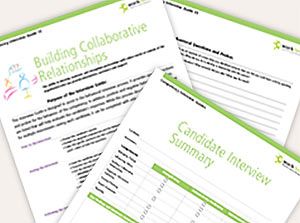 The BEI technique has been adapted and taught in Workitect’s Building Competency Models workshop and Interviewing for Competencies workshop as the Structured Event Interview.
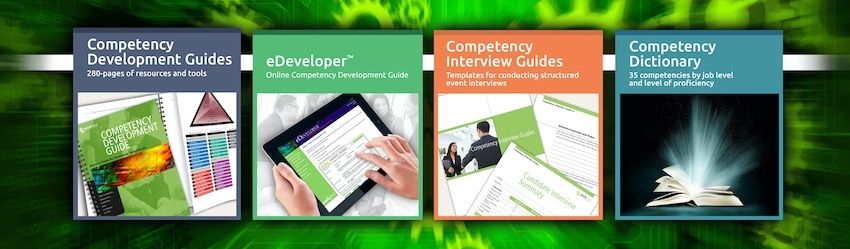
The methodology is also applied in Workitect’s set of 35 Competency Interview Guides. Each guide provides questions and probes for each of 35 competencies. They include positive and negative behavioral indicators, and a candidate summary, and can be used for panel/group interviews, and is customizable
 For additional information, call 800-870-9490, email edward.cripe@workitect.com
or use the contact form at Workitect.
©2022, Workitect, Inc.

Tags: assessment, behavioral event, competence, competencies, interviewing, leadership assessment development, talent management
Related Posts
Recent Posts

In Good Times & Tough Times, You Need Competent People
People. Not money, not buildings, not tools. Competent people are your most valuable resource. And…

What is the One-Size-Fits-All Competency Model?
In the One-Size-Fits-All Approach, a competency model is developed for a broadly defined set of…

Is Your Performance Management System Working?
If it isn’t working, consider a… COMPETENCY-BASED PERFORMANCE MANAGEMENT SYSTEM Many organizations are becoming…

The New Reality: Career Streams vs. Career Ladders
Along with many other changes in how employee performance is managed, there is a…