Develop Organizational Effectiveness and Development
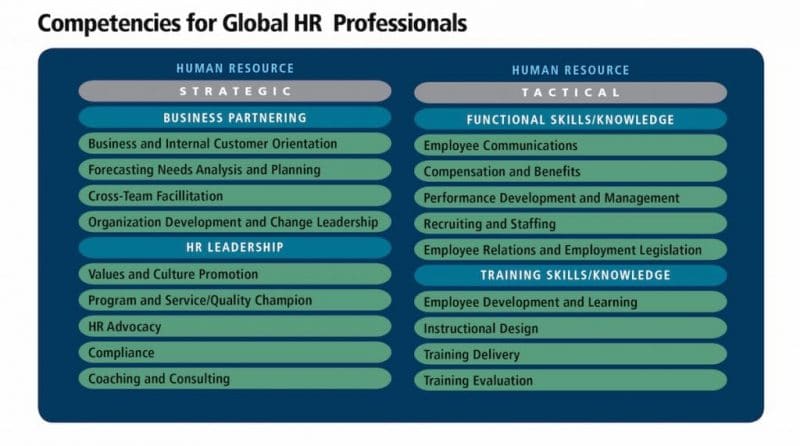
ORGANIZATION DEVELOPMENT AND CHANGE LEADERSHIP is one of eighteen competencies in Workitect’s competency model for human resources professionals working in a global environment. The model was originally developed by Workitect for a global organization. It is one of four competencies in the Strategic BUSINESS PARTNERING Competencies cluster. Resources for developing the competency are listed in the 166-page Resource Guide for Developing Global HR Competencies.
This competency addresses the ongoing challenge of managing change. Change is a painful process for most people and it is generally the ‘people’ component that is most challenging in all change initiatives. It is therefore critical that Human Resources be available to help, from the initial analysis and design phases through all stages of the change process. As impartial facilitators, the Human Resource team can help to ensure a smooth and positive process, that any changes are consistent with company’s culture and that the interests of the organization and people are taken into consideration.
In SHRM’s HR Competency Model, this competency would be similar to Behavioral Competency #5 (Consultation) and Domain 2, Functional Area #6 (Organizational Effectiveness & Development).
Definition of this competency: Effectively communicates core values and behavioural standards; monitors and facilitates internal communications; disseminates necessary information to appropriate parties; develops the organization’s image within local community.
An employee demonstrating this competency:
Process analysis and redesign
- Analyzes and redesigns organizational and business processes to ensure maximum efficiency, increased effectiveness and lasting impact.
Change Management
- Manages change to create a positive environment emphasizing the benefits of the changes.
- Oversees smooth and progressive transactions to change initiatives.
Culture redesign
- Manages and promotes organizational culture redesign efforts to ensure that the changes meet organizational objectives with respect to the organization’s brand, employee performance and customer expectations.
Evaluating
- Evaluates the effectiveness of current HR programs and practices and integrates competencies into all HR programs.
- Applies cost/benefit principles in deciding on best approaches to work.
- Performs appropriate information gathering intervention (in-depth interviews, surveys, focus groups, etc.) to determine organizational issues and needs.
Innovating
- Produces strategic and creative solutions.
- Thinks “outside the box” when addressing issues.
PRACTICING THIS COMPETENCY
As a Team Member
- Look for opportunities to get involved in change initiatives, as early as possible in the planning and analysis phase, especially with regards to people issues.
- Offer to help evaluate the various options, considering the ramifications on people and the Values and Culture Characteristics.Explore ways to integrate core, leadership and function specific competencies (where available) into all Human Resource’s programs.
- Be prepared to suggest creative solutions to problems, both within Human Resources and to your internal customers where appropriate, and especially where it concerns people.
- Offer to be part of data gathering groups, where objective evaluations are required.
As a Team Leader
- Demonstrate positive change management/facilitation skills with your own team.
- Use a specific change opportunity in Human Resources to demonstrate all of the elements and skills required in a change initiative.
- Assign members of your team to assist internal customers with change initiatives, overseeing and coaching their involvement where necessary.
- Be prepared to evaluate every Human Resource’s program to make sure that it is relevant and effective, and make changes where necessary.
OBTAINING FEEDBACK
- Each time you try out a new change management process (e.g., for planning, team decision making, team problem solving) hold a session with the team to discuss what went well and what could be done differently and better in the future.
- If you are a manager, ask the people who work for you what you can do to help foster innovation, both within the department and through cooperation with other groups.
LEARNING FROM EXPERTS
- Volunteer to serve on a cross-functional team charged with implementing change. Observe what the team leader does and keep of list of ideas to apply in your own department.
- Interview someone who has successfully led an organization/department through change. Consider people outside of your own organization, as well as people within it. Ask the person to walk you through the process he/she led. Find out how the person approached this situation and what he/she specifically did. Ask about problems that were encountered and how they were addressed.
- Interview someone who successfully developed or sponsored the development of a significant innovation. Consider people both within and outside of your organization. Ask for a detailed account of what the person did and how. Make a list of ideas that you can implement yourself.
COACHING SUGGESTIONS FOR MANAGERS
If you are coaching someone who is trying to develop this competency, you can:
- Assign the person to work on a team headed by a consultant or internal leader who is skilled in change management.
- Help the person develop a plan for working with his/her department to implement change. Think through the resources and support this person will need. Try to anticipate and develop contingency plans for problems that may be encountered.
- Make yourself available on a regular basis to discuss how the change management efforts are progressing.
- Provide opportunities for training in areas such as problem solving and change management.
- Provide opportunities for training in technical skills needed for innovation in a particular area.
- Assign the person to teams involved in developing innovations or in implementing change.
- Recognize and reward innovative behavior.
SAMPLE DEVELOPMENT GOALS
- By March 15, I will hold a meeting with the employees in my department, to review the overall direction of the division and identify what our department needs to do differently to implement this dition and to develop a plan for change.
- By April 10, I will identify a new group problem-solving method and try it out in my department.
- By May 1, I will read The Dance of Change, by Peter Senge and develop a list of ideas to try out in my department.
- By May 3, I will complete the AMA self study course in creative problem solving and prepare a list of ideas that I can apply in my own work.
- During the spring, I will volunteer to serve on an improvement team and contribute actively.
- By July 14, I will form a team to identify and implement improvements in our employee orientation process.
External resources (books, online and self-study courses) for developing this competencies.
Roadmaps for developing seventeen additional competencies are contained in Workitect’s Resource Guide for Developing Global HR Competencies, a companion to Workitect’s Competency Development Guide.
Read the Table of Contents for the HR Competencies Development Guide. Purchase the Guide.
 To learn more about our products and services, and how competencies and competency models can help your organization, call 800-870-9490, email edward.cripe@workitect.com
or use the contact form at Workitect.
©️2019, Workitect, Inc.

Tags: Career Development, change management, competency models, HR, HR strategy, organization development
Related Posts
Recent Posts

In Good Times & Tough Times, You Need Competent People
People. Not money, not buildings, not tools. Competent people are your most valuable resource. And…

What is the One-Size-Fits-All Competency Model?
In the One-Size-Fits-All Approach, a competency model is developed for a broadly defined set of…
Is Your Performance Management System Working?
If it isn’t working, consider a… COMPETENCY-BASED PERFORMANCE MANAGEMENT SYSTEM Many organizations are becoming…

The New Reality: Career Streams vs. Career Ladders
Along with many other changes in how employee performance is managed, there is a…